
You know the type. Gary Cooper in High Noon. Clint Eastwood squinting into the sunset. That guy at work who never complains, never shows weakness, and somehow keeps it all together.
For decades, this “strong silent type” was the gold standard of masculinity. The man who didn’t need to fill the air with words. Who handled his business without drama. Who kept his cards close to his chest.
Sounds pretty cool, right?
Well, here’s the problem: it’s literally killing men. And I don’t mean that metaphorically.
Where This Whole “Strong and Silent” Thing Came From
Let’s rewind a bit.
The Romans had this concept called virtus, which emphasized bravery, discipline, and emotional control as the highest expressions of manhood. Fast forward to the Industrial Revolution, and men became breadwinners praised for silent sacrifice rather than emotional connection.
Then came the World Wars. Soldiers returned home as shells of their former selves, expected to re-assimilate without complaint. By the 1950s, the American father figure was stoic, distant, and invulnerable. An image reinforced by movies, media, and modeled in countless homes.
The message? Real men don’t talk about their feelings. They just handle it.
And honestly? For a while, this seemed to work. Or at least, we thought it did.
The Part Nobody Talks About
Here’s what they didn’t mention in those old movies: when the strong silent type was prominent, men had far more heart attacks than women because they bottled everything up.
That’s not a coincidence.
According to research on the strong silent archetype, the “strong, silent” expectation often leads to suppressed emotions, missed diagnoses, and a reluctance to seek help, resulting in higher rates of negative outcomes like suicide.
Let that sink in. The very thing we’ve been told makes us “real men” is the same thing making us sick, isolated, and in some cases, dead.
Data from the American Institute for Boys and Men shows that in 2023, 39,045 men took their own lives. The suicide risk for men is four times higher than for women. Four times. The CDC reports that males make up 50% of the population but nearly 80% of suicides.
I’m not trying to be dramatic here. These are just the facts.
The “Silent” Part Is the Killer
Here’s something that took me years to understand: emotions don’t just disappear when you ignore them. They go underground. They fester. And eventually, they come out sideways.
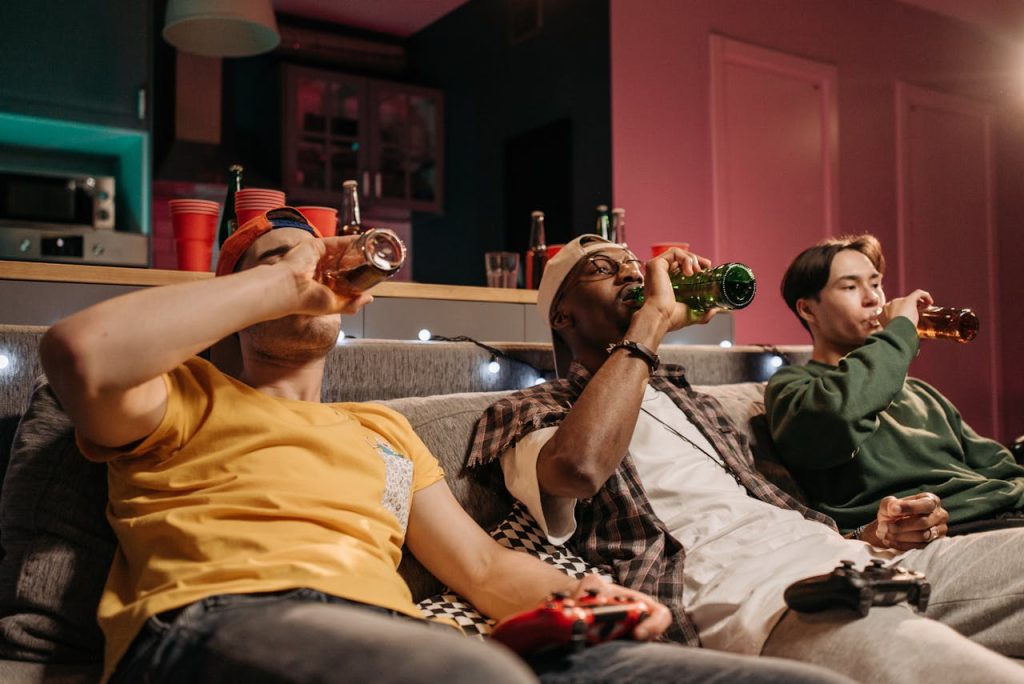
Hidden emotional struggles can manifest in dangerous ways, including dependence on alcohol or other substances, anger issues, and physical maladies such as heart disease, stroke, and diabetes.
Think about the men you know. The ones who seem fine on the surface but drink a little too much. Who work 60-hour weeks to avoid being home. Who explode over small things, then act like nothing happened.
That’s not strength. That’s survival mode.
Studies on men’s mental health confirm that men who avoid openness are more likely to turn to short-term coping mechanisms like workaholism, risky behaviors, and emotional withdrawal.
The irony is painful: we stay silent to appear strong, but the silence itself makes us weaker.
The Lonely Epidemic Nobody’s Discussing
Here’s something that surprised me when I first read it: a loneliness epidemic is pervading modern male relationships.
Makes sense when you think about it. According to Paracelsus Recovery, to build meaningful social relationships, we need to be honest, vulnerable, and intimate with our loved ones. However, all of these traits are viewed as being in opposition to these ideals of masculinity.
So we end up with surface-level friendships. Guys we watch football with but never actually talk to. Colleagues we spend eight hours a day with but know nothing about.
A friend once told me: “I have twenty guys I could call to help me move. But not one I could call at 2 AM if I was falling apart.”
That hit hard. Because I realized I was in the exact same boat.
The Tony Soprano Problem
There’s a scene in The Sopranos where Tony says something like: “What happened to the strong, silent type? Gary Cooper. Now that was an American.”
Cultural analysis of the archetype points out that the fact that Soprano, a self-pitying, violent sociopath, harbors these views is telling, with the show’s writer David Chase making a clear message on how the strong, silent type often goes hand-in-hand with a toxic masculinity.
The show gets it. These men who never show emotion, who pride themselves on being “unflappable”? They’re often the ones with the most chaos underneath.
As one analysis puts it, there is a misconception that women are more emotional than men, but emotions are not dictated by gender. Men just tend to chug their emotions down until they take form in adverse ways.
Rage. Addiction. Affairs. Breakdown.
Sound familiar?
Why We Can’t “Just Talk About It”
I know what you might be thinking: “Okay, so just open up. Problem solved.”
If only it were that simple.
Research from Priory Group reveals that as many as 40% of men have never spoken to anyone about their mental health, despite over three-quarters suffering from common symptoms like anxiety, stress, or depression.
Why? Because we’ve been conditioned since childhood. For young boys, growing up means learning how to ‘man up.’ As teenagers, girls often bond over their vulnerabilities, whereas boys learn to never speak about their feelings, for fear of being seen as insecure or inadequate.
By the time we’re adults, vulnerability feels as foreign as speaking a language we forgot decades ago. We literally don’t have the words.

So What Do We Actually Do About This?
I’m not going to pretend there’s a quick fix. There isn’t. But here are some starting points that don’t require you to suddenly become a different person.
Find one person. You don’t need to announce your feelings to the world. Start with one trusted friend, family member, or therapist. Just one.
Name what you’re feeling. Sounds basic, but most of us have a vocabulary of about three emotions: fine, tired, and stressed. Try to get specific. Frustrated? Disappointed? Overwhelmed? Research on peer support shows that by the time many of us reach our late forties and fifties, our discomfort and uncertainty about expressing emotions keep us silent. However, when we observe other men expressing emotion, it allows us to do the same.
Redefine strength. Here’s a thought that changed my perspective: vulnerability is not our weakness; it is our most accurate measure of courage. Takes more guts to admit you’re struggling than to pretend everything’s fine.
Small moments count. As one expert notes, invite him to simple activities that carry no emotional expectations: running errands together, watching a game, fixing something. These are not distractions; they are openings. Sometimes the deepest conversations happen while doing something else entirely.
Breaking the Cycle
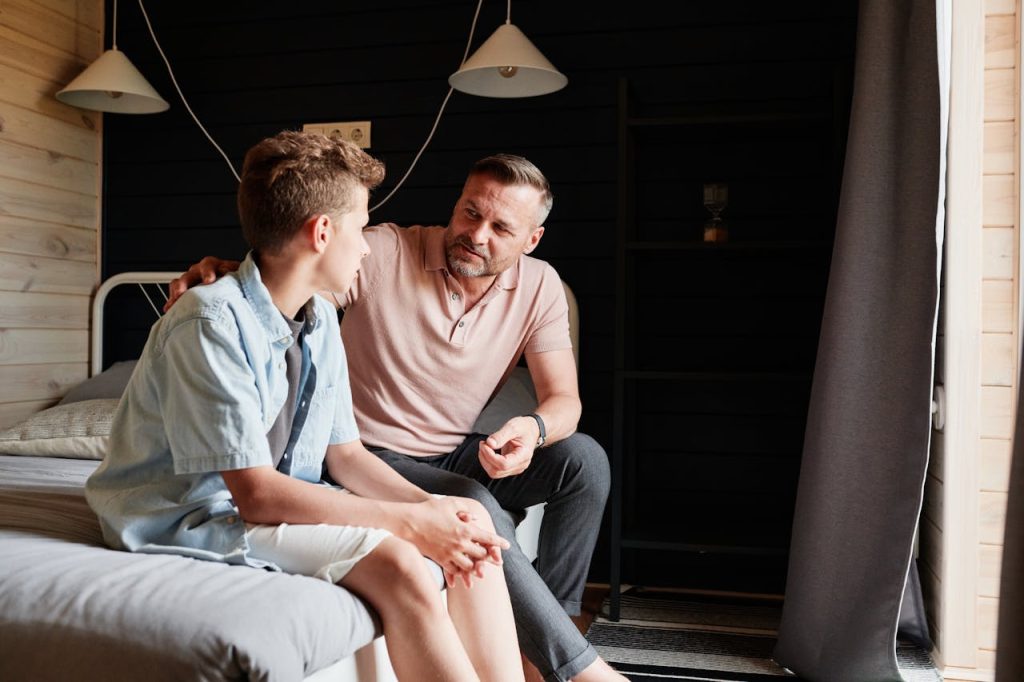
If you have sons, nephews, or young men in your life, you have a chance to change this story.
Giving boys the vocabulary to name their emotions is a good starting point. You can say, “You look sad” or “You must feel disappointed” without rescuing or coddling your son.
Let them see you experience emotions. Let them know that feeling things isn’t weakness – it’s being human.
The Real Strong Type
Here’s what I’ve come to believe: the strongest men I know aren’t the silent ones. They’re the ones who can sit with discomfort. Who can say “I’m struggling” without their identity crumbling. Who show up for the people they love, not as a facade, but as a whole person.
There are enviable characteristics of a Gary Cooper, with the idea of putting your head down, not complaining and getting things done. I’m not saying we should abandon all of that. Resilience matters. Perseverance matters.
But silence? Silence is just fear wearing a different costume.
You’re allowed to feel things. You’re allowed to talk about them. And doing so doesn’t make you less of a man. It makes you more of one.