

Here’s a question that might make you uncomfortable:
Can you name the strongest man you know?
Before you answer with the guy who benches the most or the one who never shows emotion, think harder. Who’s actually strong? The guy who can deadlift 500 pounds but falls apart when life gets hard? Or the guy who might not be jacked but shows up consistently, handles adversity with grace, and supports the people around him?
We’ve confused strength with a very narrow definition. Muscles. Toughness. Never backing down. Never showing weakness. The ability to dominate physically.
But here’s the uncomfortable truth: that’s not strength. That’s one very limited dimension of what strength can be. And by reducing strength to just physical power and emotional suppression, we’ve created generations of men who are physically capable but emotionally fragile, mentally rigid, and spiritually empty.
Real strength is so much more than that. It includes courage, resilience, emotional intelligence, integrity, vulnerability, wisdom, and the capacity to grow. It’s multidimensional, not one-dimensional.
Let’s talk about redefining manly strength for what it actually is, not what outdated stereotypes say it should be.

The Old Definition of Strength (And Why It’s Broken)
First, let’s acknowledge what we were taught.
Strength Meant Physical Dominance
The traditional definition of manly strength was primarily physical. Can you fight? Can you lift heavy things? Can you physically dominate other men?
This made sense historically when physical survival depended on strength. But we’re not living in that world anymore. Most modern challenges aren’t solved with muscles.
Yet we still measure masculinity largely by physical capacity. According to research on traditional masculine ideals, physical strength remains one of the most emphasized masculine traits across cultures.
The problem? Physical strength alone doesn’t help you navigate job loss, relationship conflict, mental health challenges, parenting dilemmas, or the complexity of modern life. It’s one tool in a toolbox, not the entire toolbox.
Strength Meant Emotional Suppression
The second part of the traditional definition: real strength means never showing emotion, never crying, never admitting fear or pain.
“Man up.” “Don’t be a pussy.” “Suck it up.” “Real men don’t cry.”
Research on emotional suppression and health consistently shows this approach damages mental health, physical health, and relationships. What we call “strength” is actually a fast track to depression, anxiety, heart disease, and social isolation.
Furthermore, emotional suppression isn’t actually strength. It’s avoidance. Real strength would be feeling emotions fully and choosing how to respond to them. Ignoring them is just hiding.
Strength Meant Never Backing Down
The third component: never admit you’re wrong, never apologize, never back down from conflict. Real men stand their ground no matter what.
This creates men who can’t resolve conflicts, learn from mistakes, or maintain healthy relationships. Studies on defensiveness and relationship satisfaction show that inability to admit wrongdoing is one of the strongest predictors of relationship failure.
Being right (or appearing right) becomes more important than being effective, wise, or connected. That’s not strength. That’s ego masquerading as principle.
The Cost of This Definition
This narrow definition of strength has created:
- Men who are physically fit but emotionally illiterate
- Men who can bench press their bodyweight but can’t handle criticism
- Men who never back down from fights but can’t maintain relationships
- Men who show no weakness but secretly struggle with mental health
- Men who appear strong externally while falling apart internally
Research on masculine norms and well-being reveals that adherence to traditional masculine ideals correlates with worse mental health outcomes, less help-seeking behavior, and more risk-taking.
The old definition isn’t just incomplete. It’s actively harmful.
[Image Placement 3: “A statue or figure cracking or crumbling despite appearing strong externally – representing the fragility behind the traditional strength facade.”]
What Strength Actually Includes
So if strength isn’t just muscles and emotional suppression, what is it?
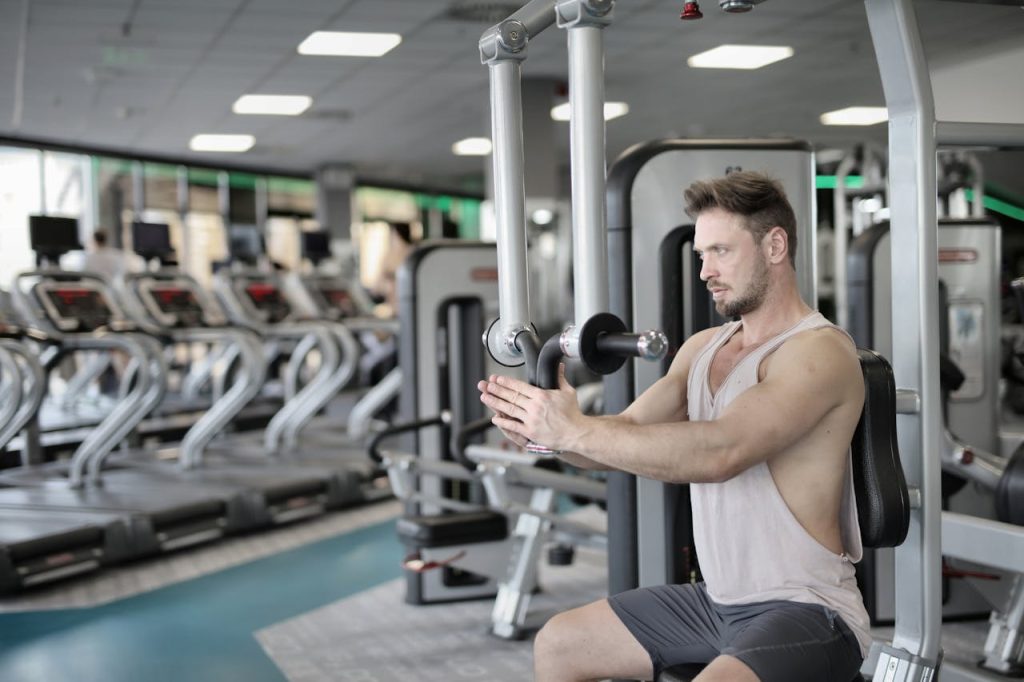
Physical Strength (Yes, Still Counts)
Let’s not throw the baby out with the bathwater. Physical strength and fitness absolutely matter.
Taking care of your body is a form of self-respect. Physical strength builds confidence, improves health, and develops discipline. There’s nothing wrong with wanting to be physically capable.
Research on exercise and mental health shows that physical fitness improves mood, reduces anxiety, and increases resilience. Your body and mind aren’t separate. Physical strength supports mental strength.
The key is recognizing that physical strength is one dimension of strength, not the totality. You can be physically strong while also developing other forms of strength. They’re not in competition.
Healthy approach: “I want to be physically strong and emotionally intelligent and mentally resilient.”
Unhealthy approach: “I’m physically strong, therefore I’m strong. Period.”
Mental Strength and Resilience
Mental strength is your capacity to handle adversity, stress, and challenges without falling apart.
It includes:
- Bouncing back from setbacks
- Maintaining focus despite distractions
- Persevering through difficulty
- Managing stress effectively
- Adapting to change
- Solving complex problems
Studies on psychological resilience show that mental toughness is a better predictor of life success than physical strength. The ability to keep going when things are hard matters more than the ability to lift heavy objects.
Furthermore, mental strength isn’t about suppressing thoughts and feelings. It’s about processing them effectively while maintaining function. Big difference.
Emotional Strength and Intelligence
This is where the old definition completely failed. Real strength includes emotional capacity.
Emotional strength means:
- Feeling your emotions without being controlled by them
- Expressing feelings appropriately in different contexts
- Understanding and managing your emotional states
- Recognizing emotions in others
- Using emotional information to guide decisions
Research on emotional intelligence consistently shows it predicts success in relationships, leadership, and overall life satisfaction better than IQ or physical capability.
The man who can cry at his daughter’s graduation isn’t weak. He’s emotionally strong enough to feel and express love. The man who can admit he’s scared before surgery isn’t weak. He’s honest and self-aware.
That’s strength.

Moral and Character Strength
Strength of character means doing what’s right even when it’s difficult, costly, or unpopular.
It includes:
- Integrity (matching actions to values)
- Honesty (telling truth even when it hurts)
- Courage (standing up for what’s right)
- Responsibility (owning your choices and their consequences)
- Loyalty (showing up for people who matter)
Studies on moral courage show that character strength often requires more courage than physical bravery. It’s easier to throw a punch than to admit you were wrong.
Think about it: which takes more strength – dominating someone weaker than you, or standing up for them? Fighting when angry, or walking away with dignity? Maintaining a lie, or admitting the truth?
Character strength is often the hardest form of strength to develop and maintain.
Relational Strength
Your capacity to build and maintain healthy relationships is a form of strength.
Relational strength includes:
- Vulnerability (letting people see the real you)
- Empathy (understanding others’ experiences)
- Communication (expressing yourself clearly and listening well)
- Conflict resolution (navigating disagreements constructively)
- Commitment (showing up consistently for people you care about)
Research on social connection and health shows that strong relationships are one of the most significant predictors of longevity and happiness. Your capacity for connection literally affects how long you live.
The man who can maintain a healthy marriage for decades has demonstrated more strength than the guy who can’t keep any relationship together but benches 300 pounds. Relationships require sustained effort, vulnerability, and growth. That’s real strength.

Spiritual and Existential Strength
This is about meaning, purpose, and your capacity to navigate life’s biggest questions.
Spiritual strength includes:
- Living according to values and principles
- Finding meaning in suffering
- Maintaining hope during dark times
- Contributing to something larger than yourself
- Developing wisdom through experience
Studies on meaning and purpose consistently show that people with strong sense of purpose live longer, healthier, more satisfied lives. Your “why” provides strength when “what” and “how” aren’t enough.
This isn’t necessarily religious (though it can be). It’s about having a philosophical framework that helps you make sense of life, death, suffering, and your place in the world.
Men who’ve developed this strength can face mortality, loss, and uncertainty with equanimity. That’s power no gym workout can provide.
The Strength to Grow and Change
Perhaps the most underrated form of strength: the capacity to admit you’re wrong and change course.
This includes:
- Accepting feedback without defensiveness
- Acknowledging limitations
- Learning from mistakes
- Changing your mind when presented with better information
- Admitting “I don’t know”
- Asking for help
Research on growth mindset shows that people who view abilities as developable rather than fixed achieve more and handle setbacks better. Believing you can grow is itself a form of strength.
The man who can say “I was wrong about that” demonstrates more strength than the man who defends obviously wrong positions to protect his ego. Flexibility is strength. Rigid defensiveness is fragility.

The Integrated Man: Strong in Multiple Dimensions
Real strength isn’t choosing one dimension. It’s developing across all of them.
What Integration Looks Like
The integrated strong man:
- Takes care of his body (physical)
- Handles adversity without falling apart (mental)
- Feels and expresses emotions appropriately (emotional)
- Lives according to his values (character)
- Builds and maintains deep relationships (relational)
- Has purpose and meaning (spiritual)
- Grows continuously (adaptive)
Notice he’s not perfect in any dimension. He’s working on all of them. That’s the key. Strength isn’t perfection. It’s balanced development across multiple areas.
Research on holistic well-being shows that people who develop across multiple dimensions of health and strength report higher life satisfaction than those who excel in one area while neglecting others.
Real-Life Examples
Think about men you actually respect (not just fear or envy). What makes them strong?
Probably not just their muscles. Probably things like: they show up consistently, they admit when they’re wrong, they’re good fathers or friends, they handle pressure well, they treat people with respect, they’ve overcome significant challenges, they’re still learning and growing.
That’s multidimensional strength. And it’s far more impressive than any single metric.

How to Develop Real Strength
Alright, so how do you actually build strength across these dimensions?
Assess Your Current State
First, honestly evaluate where you are across different dimensions.
Rate yourself (1-10) on:
- Physical strength and health
- Mental resilience and focus
- Emotional intelligence and expression
- Character and integrity
- Relationship quality and depth
- Sense of purpose and meaning
- Openness to growth and change
This isn’t about judgment. It’s about clarity. You can’t develop what you haven’t identified as needing development. Furthermore, research on self-assessment and improvement shows that honest self-evaluation is the first step toward meaningful change.
Most men will find they’re strong in 1-2 dimensions and weak in others. That’s normal. Now you know where to focus.

Start With Your Weakest Area
Don’t just double down on what you’re already good at. That’s comfortable but limiting.
If you’re physically strong but emotionally illiterate, work on emotional intelligence. If you’re great at relationships but physically out of shape, hit the gym. If you’re mentally tough but have no spiritual depth, explore purpose and meaning.
Real strength requires developing your weaknesses, not just showcasing your strengths. Studies on deliberate practice show that improvement happens at the edge of your competence, not in your comfort zone.
Physical Strength: Move Your Body Consistently
You don’t need to become a bodybuilder. But you do need to move.
Simple approach:
- Lift weights 2-3 times per week (builds strength and confidence)
- Do cardio 2-3 times per week (builds endurance and mental toughness)
- Stay active daily (walk, stretch, play sports)
- Eat reasonably well (fuel matters)
Research on exercise and well-being shows even moderate physical activity significantly improves mental health, confidence, and resilience. You don’t have to be elite. You just have to be consistent.
Mental Strength: Train Your Mind
Mental resilience is built through challenge and practice.
Try:
- Meditation or mindfulness (builds focus and emotional regulation)
- Cold exposure (builds mental toughness and stress tolerance)
- Difficult books (develops concentration and critical thinking)
- Problem-solving challenges (chess, puzzles, strategy games)
- Stress inoculation (deliberately doing hard things)
Studies on resilience training show that mental strength, like physical strength, responds to progressive challenge. Start small and build.

Emotional Strength: Learn the Language of Feelings
Most men never learned emotional literacy. Time to learn it now.
Practice:
- Name emotions beyond “fine,” “good,” “bad” (develop vocabulary)
- Notice physical sensations that accompany emotions (body awareness)
- Express feelings in safe contexts (therapy, men’s groups, trusted friends)
- Respond to others’ emotions with empathy (practice until natural)
- Read books on emotional intelligence (learn the framework)
Research on affect labeling shows that simply naming emotions reduces their intensity. You’re not becoming more emotional. You’re becoming more emotionally intelligent.
Character Strength: Live Your Values
Identify what you stand for, then actually stand for it.
Steps:
- Write down your core values (what matters most to you)
- Identify where you’re not living them (be honest)
- Make one change to align actions with values (start small)
- Practice courage in small ways (build the muscle)
- Hold yourself accountable (journal or work with someone)
Studies on value-based action show that living according to explicit values increases well-being and life satisfaction. Character strength is built through consistent choice.
Relational Strength: Invest in Connection
Strong relationships require intentional effort.
Try:
- Schedule regular time with people you care about (don’t just hope it happens)
- Practice vulnerability (share something real)
- Listen more than you talk (develop genuine interest)
- Repair conflicts quickly (apologize, forgive, reconnect)
- Show appreciation regularly (express gratitude and love)
Research on relationship maintenance shows that strong relationships require consistent investment. They don’t maintain themselves. Your effort is the strength that builds them.
![[Image Placement 11: "Men in genuine conversation or activity together - representing the active work of building relational strength."]](https://masculinitism.com/wp-content/uploads/2025/12/pexels-allan-mas-5370372-1024x559.jpg)
Spiritual Strength: Develop Your Philosophy
Work on the big questions, even if you don’t find perfect answers.
Explore:
- What gives your life meaning?
- What values guide your decisions?
- How do you make sense of suffering?
- What’s your responsibility in the world?
- What matters most when everything else is stripped away?
Read philosophy, talk with wise people, reflect regularly, develop your personal creed. Research on meaning-making shows that people with strong philosophical frameworks handle adversity better and report greater life satisfaction.
Growth Strength: Stay Humble and Curious
Make learning and growth non-negotiable.
Practice:
- Admit when you don’t know something
- Seek feedback actively (ask people for honest input)
- Read widely (books, articles, perspectives different from yours)
- Try new things (stay open to unfamiliar experiences)
- Reflect on mistakes (what did this teach me?)
Studies on lifelong learning show that people who maintain curiosity and openness throughout life age better mentally and report higher satisfaction. The capacity to grow is itself a strength.
Common Obstacles to Redefining Strength
Let’s address what gets in the way.
Obstacle 1: “But I’ll Be Seen as Weak”
You’re worried that developing emotional intelligence, admitting mistakes, or showing vulnerability will make people think you’re weak.
Reality: People who are secure judge strength accurately. People who are insecure might mock anything that challenges their narrow definition. Their opinion says more about them than you.
Furthermore, research shows that authentic self-presentation earns more respect long-term than performance. Real recognizes real.

Obstacle 2: “I Don’t Have Time to Work on All This”
Building strength across multiple dimensions feels overwhelming.
Reality: You don’t need to work on everything simultaneously. Pick 1-2 areas per quarter. Small consistent effort compounds. You’re not trying to be perfect. You’re trying to be more balanced than you were.
Moreover, many practices overlap. Physical exercise builds mental resilience. Therapy develops emotional and relational strength. Reading develops mental and spiritual strength. Smart choices create multiple benefits.
Obstacle 3: “This Feels Like Too Much Soft Stuff”
Some guys resist anything that sounds “soft” or “feelings-focused.”
Reality: Nothing about emotional intelligence, character development, or relational strength is soft. These are among the hardest things to develop. They require more courage than lifting weights ever will.
Try being honest about your feelings in a relationship. Try admitting you were deeply wrong. Try maintaining integrity when it’s costly. Then tell me that’s “soft.” Research on moral courage confirms these require tremendous strength.
Obstacle 4: “I’m Too Old to Change”
You think you’ve been one way too long to develop new forms of strength.
Reality: Research on neuroplasticity shows the brain can form new patterns at any age. You can develop new strengths throughout life. It’s never too late.
Start where you are. Every step forward is progress. Comparing yourself to where you “should” be is pointless. Compare yourself to where you were last month.
The Bottom Line: Strength Is Multidimensional
Here’s what I need you to understand: reducing strength to muscles and emotional suppression isn’t just incomplete. It’s destructive.
Real strength is multidimensional. It includes your body, mind, emotions, character, relationships, spirit, and capacity to grow. Developing across all dimensions creates actual strength. Developing only one or two creates an impressive facade with a hollow interior.
The strongest men aren’t the ones who can lift the most weight or who never show emotion. They’re the ones who can handle whatever life throws at them while staying connected to themselves and others, living according to their values, and continuing to grow.
That’s the kind of strength that lasts. That’s the kind of strength that serves you at 25 and 85. That’s the kind of strength that makes you someone others genuinely respect, not just fear or envy.
You don’t have to choose between being physically strong and being emotionally intelligent. You don’t have to choose between being tough and being vulnerable. You don’t have to choose between being dominant and being connected.
You can be all of it. You should be all of it.
That’s redefining manly strength. Not rejecting physical strength, but expanding the definition to include everything that actually makes a man strong.
So yes, lift weights if you want. Get physically fit. That matters. But also develop emotional intelligence. Build character. Strengthen relationships. Find meaning. Stay humble and keep growing.
That’s not diluting strength. That’s completing it.
Your Strength Development Action Plan
Don’t just read this and forget it. Actually start building:
This week:
- Assess yourself across the seven dimensions of strength (rate 1-10)
- Identify your two weakest areas
- Take one small action to develop one weak area
This month:
- Create a simple practice for your weakest dimension (consistent effort matters more than intensity)
- Notice when you default to narrow strength definitions (catch yourself)
- Share this expanded view of strength with someone (teaching reinforces learning)
Ongoing:
- Work on 1-2 dimensions per quarter (rotate focus areas)
- Celebrate growth in all dimensions, not just physical
- Remember: strength is built over time, not overnight
You’re not trying to be perfect. You’re trying to be more complete than you were yesterday.
The Invitation
You have a choice about what kind of strong you’ll become.
You can pursue the narrow definition that society handed you (muscles and emotional suppression) and wonder why you feel empty despite looking impressive.
Or you can pursue the full definition of strength (developing across all dimensions) and become genuinely formidable in a way that serves you and everyone around you.
One option is easy to show off but hollow inside. One option is harder to build but solid through and through.
The men you most respect, who’ve most positively impacted your life, who demonstrate real strength in action (they probably weren’t just physically strong). They were strong in character. In relationships. In how they handled adversity. In their capacity to grow and change.
That’s the strength worth pursuing. That’s the strength that lasts. That’s the strength that actually makes your life and the lives of people around you better.
Physical strength might help you move heavy objects. Multidimensional strength helps you move through life with purpose, connection, resilience, and peace.
Which do you want?
Stop limiting yourself to one dimension. Start building across all of them.
That’s redefining manly strength. And it starts with you, right now, making the choice to develop more completely than you have been.
You’re capable of so much more than you’ve been told strength means.
Time to prove it by becoming it.
How do you define strength? What dimensions have you neglected? What’s helped you develop beyond just physical strength? Share your experience below (your perspective might help another man expand his definition).