
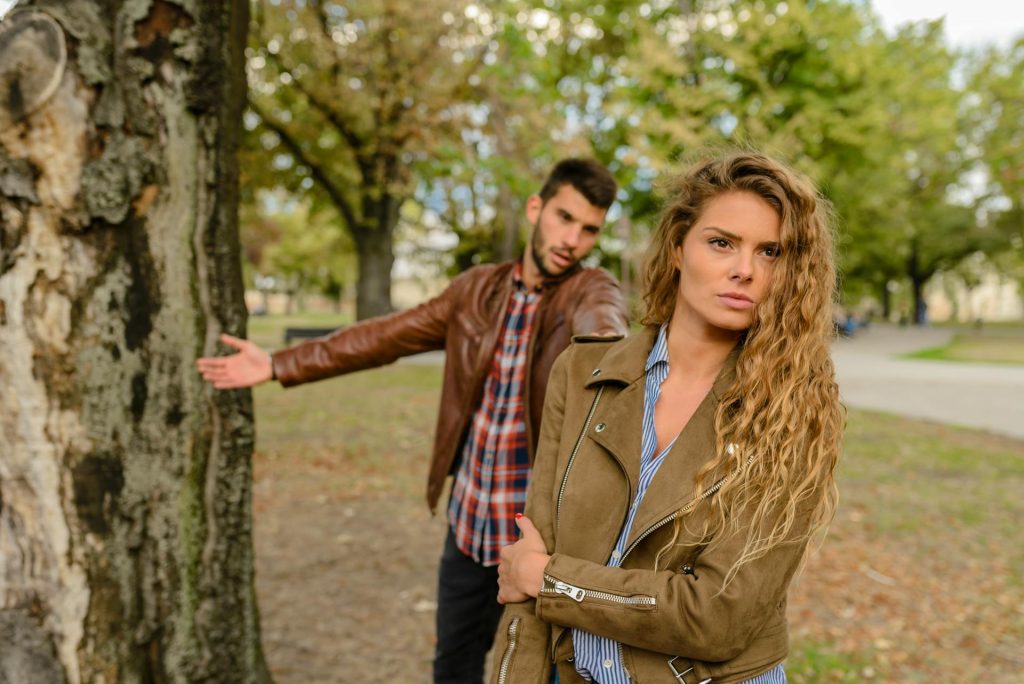
Ever wonder why you keep ending up in the same kind of relationship, even with different people?
You know the pattern. Maybe you’re always chasing someone emotionally unavailable. Maybe you panic the moment things get serious. Or maybe you find yourself constantly needing reassurance that your partner loves you – even when they’ve said it a thousand times.
Here’s something that might surprise you: these patterns probably didn’t start with your ex. They started way earlier. Like, way earlier.
We’re talking about childhood.

Your First Love Story Wasn’t Romantic
Before you ever had a crush, before your first kiss, before any of that – you were already learning how love works.
Your teachers? Your parents. Or whoever raised you.
According to attachment theory, the bonds you formed with your caregivers as a child created a kind of template for all your future relationships. Think of it like an invisible blueprint. You didn’t choose it. You weren’t even aware it was being drawn. But it’s been shaping how you connect with people ever since.
A 2024 study in Frontiers in Psychiatry confirmed what many researchers have been saying for decades: childhood experiences directly predict how satisfied you’ll be in romantic relationships as an adult.
In other words, your love life today might have more to do with what happened at age 5 than what happened last Friday.
The Four Ways People Learn to Love
Based on those early experiences, most people develop one of four attachment styles. And according to research, about 50-60% of people develop a secure attachment, while the rest fall into one of three insecure categories.
Let me break it down.
Secure attachment means you’re comfortable with intimacy and independence. You can trust your partner without constantly worrying they’ll leave. You grew up feeling safe, seen, and supported – so relationships feel natural, not threatening.
Anxious attachment shows up as a fear of abandonment. You crave closeness but worry you want more than your partner can give. Maybe your caregiver was inconsistent – loving one moment, distant the next. So now, you’re always watching for signs that someone might pull away.
Avoidant attachment looks like emotional distance. You value your independence to the point where intimacy feels suffocating. Perhaps your caregivers weren’t emotionally available, so you learned early that depending on others leads to disappointment.
Disorganized attachment is a mix of anxious and avoidant. You want closeness but fear it at the same time. Often, this develops when a caregiver was both a source of comfort and fear.
Here’s an interesting stat from a YouGov survey: Americans with disorganized attachment are the least likely to be in romantic relationships (only 48%, compared to 71% of securely attached people).

How This Actually Plays Out
Let’s get practical. What does childhood’s impact on your love life actually look like?
Maybe like this:
You finally meet someone great. Things are going well. And then, inexplicably, you start picking fights. Or pulling away. Or finding flaws that didn’t bother you before.
Or maybe the opposite: someone treats you poorly, and instead of walking away, you double down. You convince yourself that if you just love them harder, they’ll change.
I’ve been there. Growing up, I watched my mother repeatedly give my alcoholic father “one more chance.” Without realizing it, I carried that pattern into my own relationships for years. I’d stay in situations I shouldn’t have stayed in, believing that loyalty meant endurance.
It took me a long time to understand that I wasn’t making free choices. I was replaying old scripts.
The Invisible Wounds You’re Carrying
Research from BYU shows that survivors of childhood trauma often struggle with emotional regulation in relationships. They might overreact to small conflicts, shut down during difficult conversations, or struggle to feel safe even with loving partners.
And here’s something that often gets overlooked: you don’t need to have experienced obvious trauma for this to apply.
According to Dr. Susan Albers at Cleveland Clinic, emotional neglect – not having your feelings validated, being told to “toughen up,” or simply having emotionally unavailable parents – can be just as impactful as more visible forms of trauma.
A child who was told “stop crying, you’re fine” a hundred times learns that their emotions don’t matter. But that lesson doesn’t just disappear at 18. It shows up every time they struggle to tell their partner what they actually need.

The Science Is Pretty Clear
A large longitudinal study followed over 700 participants from childhood into their late 20s and early 30s. The findings were striking.
The relationship with one’s mother was the strongest predictor of adult attachment security – not just with romantic partners, but across all relationships. People who had more conflict with their mothers, or whose mothers showed less warmth, tended to feel more insecure in their adult relationships.
But before you go blaming your mom for everything (tempting, I know), understand this isn’t about assigning fault. Your parents were probably doing the best they could with what they had. Many of them were carrying their own unhealed wounds.
The point isn’t blame. The point is awareness.
Why Awareness Matters
Here’s the good news: attachment styles aren’t permanent.
Research suggests there’s about 30-40% stability between childhood and adult attachment patterns. That means more than half of people experience some change. Life events, meaningful relationships, and intentional work can all shift how you attach to others.
The first step? Simply noticing.

Practical Steps to Start Healing
If you’re recognizing yourself in any of this, here’s where to start:
Name your pattern. What do you tend to do when relationships get serious? Pull away? Cling tighter? Start fights? Pick unavailable partners? You can’t change what you can’t see.
Trace it back. Ask yourself: where did I first learn this? What was I taught about love, trust, and vulnerability as a kid? Journaling can be incredibly useful here.
Get curious, not critical. Your attachment style isn’t a character flaw. It was a survival mechanism. A child who learned not to trust did so for good reasons. Thank that part of yourself for protecting you, even if the protection no longer serves you.
Consider therapy. Trauma-informed therapy can help you process old wounds in a safe environment. Approaches like EMDR, CBT, and attachment-focused therapy have strong evidence behind them.
Practice in safe relationships. Healing doesn’t just happen in a therapist’s office. It happens in everyday moments with friends, partners, and family members who respond to your vulnerability with care.

A Word About Reparenting
One of the most powerful concepts in healing attachment wounds is “reparenting yourself.”
It sounds a bit strange, I know. But here’s what it means: you become the parent your younger self needed.
When you’re feeling anxious in a relationship, instead of spiraling or seeking reassurance from your partner, you pause. You speak to yourself the way a loving parent would speak to a scared child: “It’s okay. You’re safe. This feeling will pass.”
When you’re tempted to push someone away, you acknowledge the fear underneath. You remind yourself that closeness doesn’t have to mean pain.
Research on inner child work shows that this kind of self-compassion practice can genuinely rewire old patterns over time.
The Bottom Line
Your childhood absolutely shaped your love life. The research is clear on that.
But here’s what I want you to take away: shaped doesn’t mean determined.
You’re not doomed to repeat your parents’ patterns. You’re not stuck in the same cycles forever. Awareness is the first step. Healing is the journey. And a different kind of love is possible.
It won’t happen overnight. Some days, you’ll catch yourself falling into old habits, and that’s okay. Progress isn’t linear.
But every time you choose differently – every time you stay when you want to run, or speak up when you want to hide, or trust when everything in you screams not to – you’re rewriting that old blueprint.
You’re not the child who learned that love is unsafe. You’re the adult who’s learning it can be something else entirely.

What patterns from your childhood have you noticed showing up in your relationships? Feel free to share in the comments – we’re all figuring this out together.