

You ever notice how a certain smell can instantly transport you back to being eight years old? Or how you react to criticism in a way that feels… disproportionate?
Yeah, me too.
Here’s something most men don’t talk about: childhood trauma doesn’t just stay in childhood. It follows you into your career, your relationships, your midnight thoughts when you can’t sleep. And the worst part? You might not even realize it’s happening.
The Invisible Wound
Let’s get real for a second. When we hear “childhood trauma,” most guys think of extreme cases. Abuse, neglect, violence. The really bad stuff.
But trauma isn’t always that obvious.
Maybe your dad was emotionally distant. Maybe you were bullied and nobody stepped in. Maybe your parents divorced and you felt responsible. Maybe you were the kid who had to “be strong” for everyone else.
According to research from the CDC’s Adverse Childhood Experiences Study, nearly two-thirds of adults report experiencing at least one traumatic event before age 18. And for men? We’re taught to just… get over it.
“That was years ago.” “Everyone had it rough.” “Stop being dramatic.”
Sound familiar?
Why Men’s Trauma Gets Ignored
Here’s the uncomfortable truth: society gives men about zero permission to acknowledge childhood pain.
Think about it. A woman talks about her difficult childhood? People listen, empathize, encourage therapy. A man brings up his past? He’s told to move on, stop dwelling, focus on solutions.
I once mentioned to a friend that I was still processing some stuff from my teenage years (yeah, even blog writers have feelings). His response? “Dude, that was like 15 years ago. Just let it go.”
As if trauma has an expiration date.
The American Psychological Association notes that men are significantly less likely to recognize their own trauma symptoms or seek help for them. We’re too busy “being strong” to admit we’re still carrying wounds from decades ago.

How Childhood Trauma Shows Up in Adult Men
Okay, so how do you know if your past is controlling your present? Let’s talk about the signs nobody mentions.
You struggle with anger (even when it makes no sense)
Ever exploded over something small? Like, really small? Your partner forgets to text back and suddenly you’re furious for three hours?
That’s not about the text. That’s about the time you felt abandoned as a kid and never processed it. Unresolved trauma often resurfaces as anger because anger feels more acceptable than hurt or fear.
You can’t do vulnerable
Relationships keep you at arm’s length. You share the fun stuff, the surface stuff, but when it comes to real intimacy? Hard pass.
Vulnerability feels dangerous because once, when you were young and defenseless, being open got you hurt. Your nervous system remembers, even if your conscious mind doesn’t.

You’re always waiting for the other shoe to drop
Things are going well at work. Your relationship is stable. Life is… good. But you can’t shake the feeling that something bad is about to happen.
Children who grow up in unpredictable or chaotic environments develop hypervigilance. It’s a survival mechanism. The problem? It doesn’t turn off just because you’re an adult now.
You numb out (excessive drinking, gaming, working)
When emotions feel overwhelming, you find ways to not feel them at all. Substance abuse, workaholism, binge-watching TV until 3 AM. Anything to avoid sitting with discomfort.
You repeat the same patterns in relationships
Dating someone who’s emotionally unavailable (again). Getting into the same fight with a different partner. Sabotaging things when they get too good.
This isn’t bad luck. Trauma creates neural pathways. Your brain literally rewires itself to expect certain patterns, then unconsciously recreates them because they feel familiar.

The Body Remembers What the Mind Forgets
Here’s something wild: your body stores trauma even when your conscious memory doesn’t.
Ever had an unexplained panic attack? Physical tension that won’t go away no matter how many massages you get? Chronic pain that doctors can’t explain?
Research on trauma and the body shows that traumatic memories aren’t just stored in your mind. They’re encoded in your nervous system, your muscles, your gut.
That tightness in your chest when someone raises their voice? That’s not random. That’s your body remembering.
Breaking Free (Without Falling Apart)
Alright, enough doom and gloom. What do you actually do about this?
Step 1: Stop calling it “just the past”
First, you’ve got to acknowledge that what happened to you matters. Even if other people had it worse. Even if it was “normal” for your family. Even if you’ve convinced yourself you’re over it.
Your pain is valid. Period.
Step 2: Find a therapist who gets trauma
Not just any therapist. You need someone trained in trauma-informed care. Look for specialists in EMDR, somatic experiencing, or internal family systems.
And yes, I know. Therapy feels weird. Especially for men. Do it anyway.

Step 3: Learn your triggers
Start noticing patterns. When do you get disproportionately angry? What situations make you want to shut down? Who in your life triggers old feelings?
Awareness is the first step to breaking the cycle.
Step 4: Try somatic work
Since trauma lives in your body, healing has to involve your body. This might mean yoga, breathwork, martial arts, or just learning to notice physical sensations without judgment.
The goal isn’t to think your way out of trauma. It’s to help your nervous system realize you’re safe now.
Step 5: Build a support system
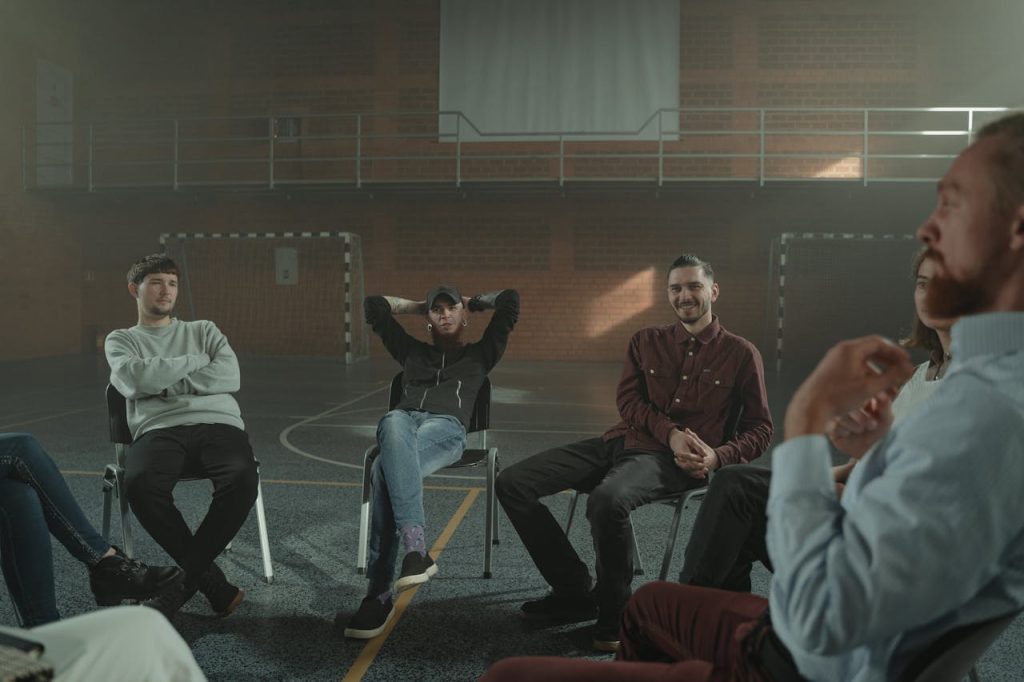
You can’t heal in isolation. Find men who are also doing this work. Join a men’s group. Talk to friends who won’t tell you to just “get over it.”
Healing happens in relationship with others.
What About the Kids You’re Raising?
If you have children (or plan to), here’s the thing: your unhealed trauma doesn’t just affect you. It affects them.
Kids don’t need perfect parents. But they do need parents who are willing to do their own work. Because the patterns you don’t heal, you pass down.
The good news? Breaking the cycle starts with you. By addressing your own childhood wounds, you’re already giving your kids something you didn’t have: a parent who’s emotionally available and present.

The Truth About Healing
Real talk: healing from childhood trauma isn’t linear. Some days you’ll feel like you’ve got it figured out. Other days, something will trigger you and you’ll feel like you’re back at square one.
That’s normal. That’s part of the process.
You’re not broken. You’re not damaged beyond repair. You’re a human being who went through hard things and developed coping mechanisms to survive. Those mechanisms served you then. But now? They’re probably holding you back.
And that’s okay. Because now you get to choose different.
Your Move
Look, I’m not saying you need to spend the next decade in therapy unpacking every childhood memory. But I am saying this: if your past keeps showing up in your present (in your relationships, your reactions, your recurring patterns), it’s worth paying attention to.
You can’t change what happened to you. But you can change how it affects the rest of your life.
The old script says “real men don’t dwell on the past.” But here’s the thing: real men do whatever it takes to show up fully in their lives. Even if that means facing the stuff they’ve been running from for years.
So what’s one small step you can take today? Maybe it’s finally booking that therapy appointment. Maybe it’s journaling about a memory you’ve been avoiding. Maybe it’s just admitting (out loud, to yourself) that your childhood wasn’t as “fine” as you’ve been pretending.
Whatever it is, take the step. Your future self will thank you.
And hey, if you need a sign to start dealing with this stuff? Consider this it.

Tudor Cioaba is the founder of Masculinitism and a Senior UX Researcher who studies how people think, feel, and decide. He holds an MBA and is a certified NLP Practitioner and Life & Business Coach. After more than twelve years of personal inner work, he writes about healthy masculinity from lived experience, not theory: honest, practical, and free of hype.