
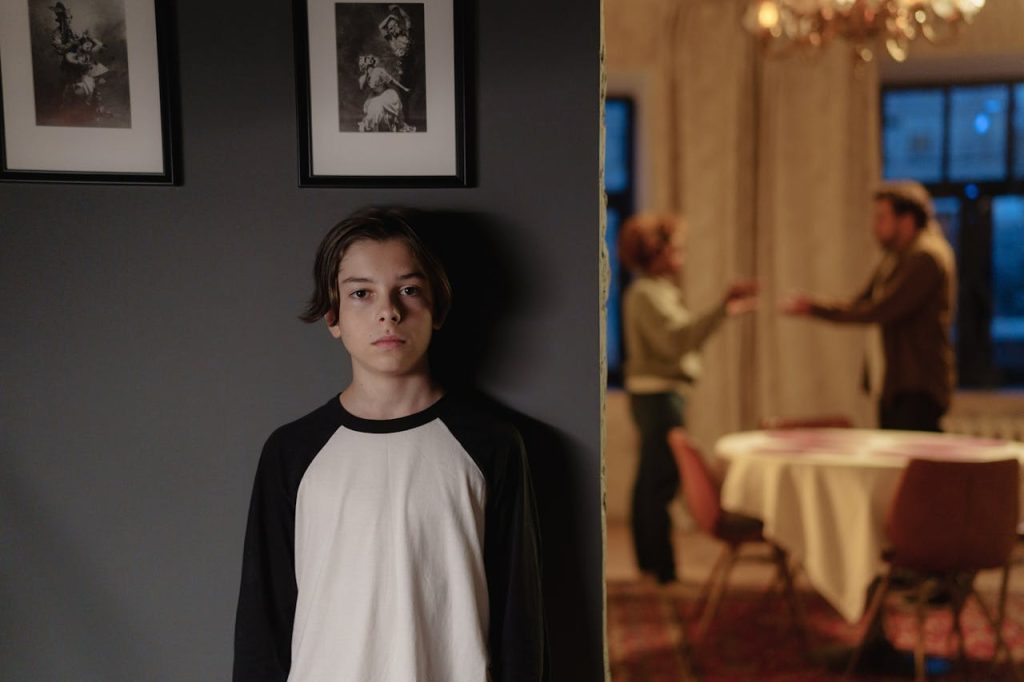
Here’s the uncomfortable truth: the way you love, fight, connect, and pull away in your adult relationships often has very little to do with your current partner. It has everything to do with what happened before you ever met them.
Ever wonder why you keep ending up in the same kind of relationship? Or why certain things your partner does trigger you so intensely, even when you know you’re overreacting?
Your childhood.
I know, that sounds like a cliché at this point. “Blame it on your parents.” But the science is clear, and it’s worth understanding. Because once you see the patterns, you can actually change them.
Your First Relationship Sets the Template
Before you ever went on a date, held hands with someone, or had your heart broken, you were already learning what love looks like.
Your relationship with your primary caregivers (usually mom and dad) was your first classroom for intimacy. How they responded to your needs, how they handled conflict, how they showed affection, or didn’t, became the blueprint you carry into every relationship that follows.
According to research from the University of Minnesota, early experiences exert small but lasting effects on how we think, feel, and behave in adult romantic relationships years later. The study followed participants from birth into adulthood and found specific pathways through which early-life experiences impact romantic relationship functioning.
In other words, what happened when you were five is still showing up when you’re thirty-five. Wild, right?
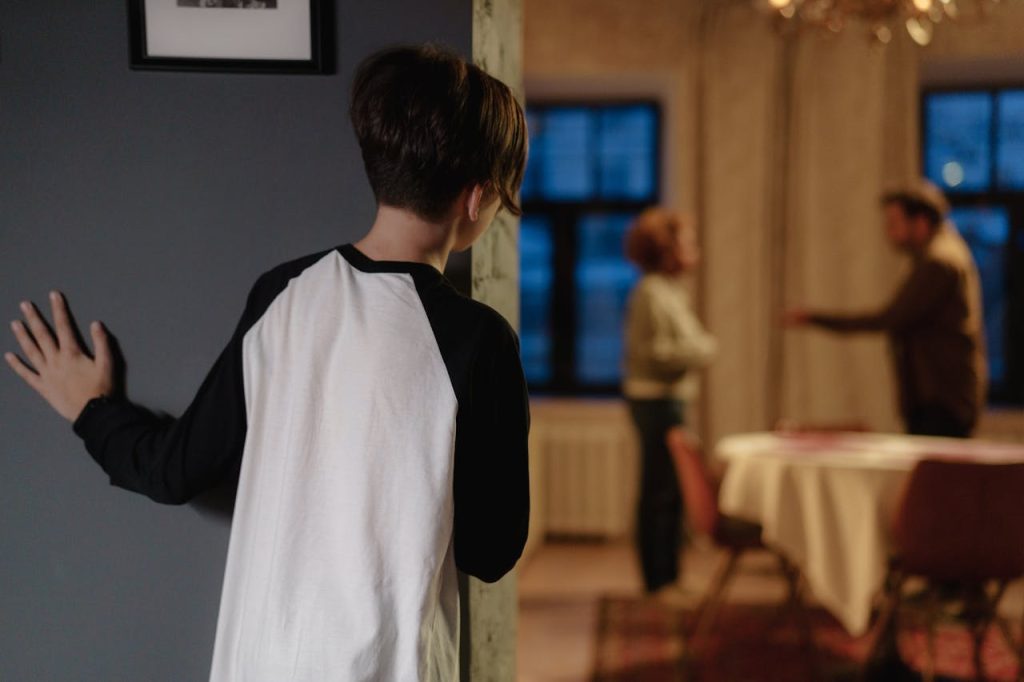
Attachment Styles: The Invisible Blueprint
You’ve probably heard the term “attachment style” thrown around. It’s become a bit of a buzzword, but there’s real science behind it.
Attachment theory, pioneered by psychiatrist John Bowlby and psychologist Mary Ainsworth, shows that the bonds we form with caregivers in childhood create patterns that persist into adulthood. These patterns affect how comfortable we are with intimacy, how we handle conflict, and what we expect from partners.
Here’s a quick breakdown:
Secure attachment develops when caregivers are consistently responsive and supportive. As adults, securely attached people are comfortable with closeness and can depend on others while letting others depend on them. They tend to have more stable, satisfying relationships.
Anxious attachment often comes from inconsistent caregiving, where love and attention were unpredictable. As adults, anxiously attached people tend to crave closeness but worry constantly about whether their partner really loves them. They might need frequent reassurance and fear abandonment.
Avoidant attachment typically develops when caregivers were emotionally unavailable or dismissive. Adults with this style tend to value independence to an extreme degree, feel uncomfortable with too much closeness, and may pull away when relationships get serious.
Disorganized attachment usually results from frightening or chaotic caregiving, sometimes involving abuse or neglect. Adults with this pattern often want intimacy but also fear it. They may show confusing, push-pull behaviors in relationships.
A 2025 study published in the Journal of Personality and Social Psychology found that people who felt closer to their mothers and had less conflict with them in childhood tended to feel more secure in all their relationships as adults, including friendships and romantic partnerships.
The good news? Attachment styles aren’t permanent. They can change with awareness and effort.
How Childhood Trauma Shows Up in Love
Not all of us had overtly traumatic childhoods. But even experiences that seem “not that bad” can leave marks.
Maybe your parents fought constantly. Maybe one of them was emotionally absent. Maybe you were criticized often or made to feel like a burden. Maybe there was divorce, addiction, or financial stress that colored your childhood with anxiety.
Research published in Frontiers in Psychiatry shows that childhood trauma, including emotional abuse, physical abuse, sexual abuse, emotional neglect, and physical neglect, negatively impacts romantic relationship satisfaction in adulthood. The study found that traumatic experiences shape insecure attachment patterns and hinder emotional regulation, both of which complicate intimate relationships.
According to Psychology Today, experiences of abuse within the family of origin can create a template for how we perceive ourselves and others in intimate relationships later in life. People raised in abusive environments sometimes unconsciously seek out relationships that mimic those patterns, not because they want to suffer but because dysfunctional dynamics feel familiar.
Here’s what childhood wounds might look like in adult relationships:
Trust issues. If caregivers were unreliable or betrayed your trust, you might struggle to believe anyone will really be there for you. You might test partners, look for evidence they’ll leave, or sabotage relationships before you can get hurt.
Fear of abandonment. If you experienced loss or emotional unavailability in childhood, you might cling to partners, tolerate bad treatment because being alone feels worse, or panic at any sign of distance.
Difficulty with intimacy. If vulnerability led to pain in childhood, getting close to someone as an adult might feel dangerous. You might keep partners at arm’s length or struggle to open up emotionally.
Repeating unhealthy patterns. You might find yourself attracted to people who treat you the way your caregivers did, or unconsciously recreating dynamics from your childhood home.
Emotional volatility. If you didn’t learn healthy emotional regulation as a child, you might have intense reactions during conflict, either exploding or shutting down completely.
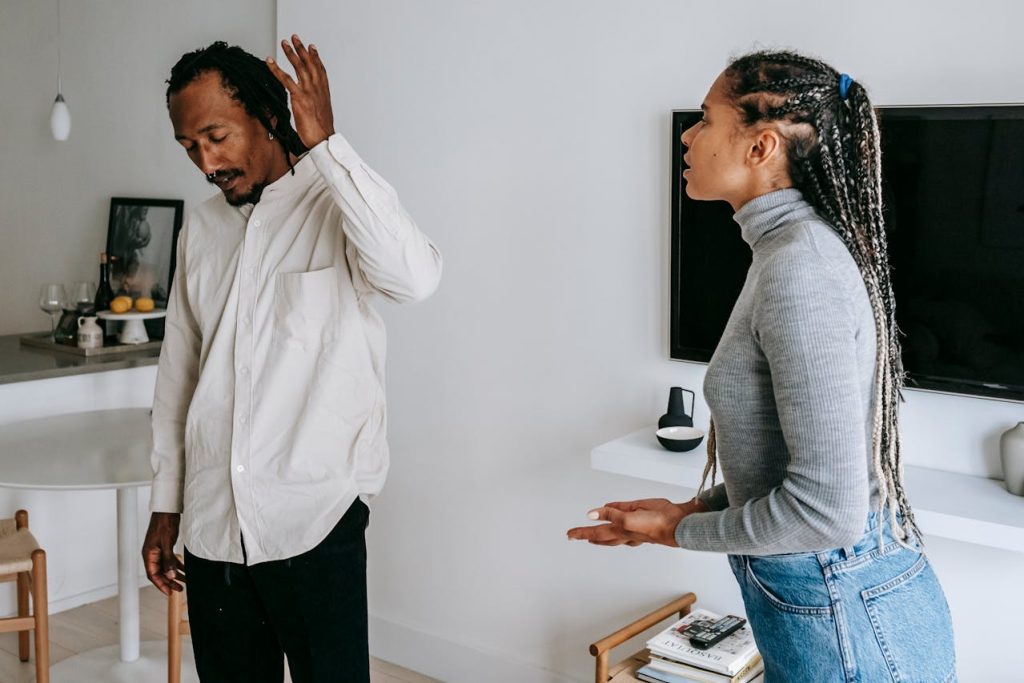
What You Learned About Love (Without Realizing It)
Here’s something that took me a while to understand: we don’t just inherit our parents’ eye color or tendency toward dad jokes. We inherit their relationship patterns.
A study published in PMC found that the type of parenting received as a child directly influences adult romantic relationships. Children appear to acquire “scripts” that are tacitly relied upon and enacted during interaction with romantic partners.
Think about it:
If your parents yelled during arguments, you might default to raising your voice when stressed, or you might go to the opposite extreme and avoid conflict entirely.
If affection was rarely shown in your home, you might feel uncomfortable with physical touch or struggle to express love verbally.
If one parent always gave in to keep the peace, you might have learned that love means sacrificing your own needs.
If your parents divorced, you might carry fears about commitment or have complicated feelings about marriage.
Research from ScienceDirect found that positive attachment experiences with parents (reliability, closeness, supportiveness) were associated with greater satisfaction in romantic relationships, stronger family ties, and less loneliness in adulthood. Stressful childhood experiences like conflicts and violence negatively predicted relationship quality.
None of this is about blame. Your parents were doing their best with what they had, just like their parents before them. But understanding these patterns is the first step toward changing them.
The Patterns That Keep You Stuck
Let’s get specific. Here are some common ways childhood experiences show up in adult love lives:
The Pursuer-Distancer Dynamic. One partner constantly seeks more connection while the other pulls away. This often happens when someone with anxious attachment pairs with someone avoidant. Both are acting out childhood survival strategies.
Choosing Unavailable Partners. If a parent was emotionally unavailable, there can be a subconscious pull toward partners who are similarly hard to reach. The familiar feeling of longing can be mistaken for love.
Tolerating Mistreatment. If you learned as a child that love came with conditions, criticism, or pain, you might accept treatment as an adult that you shouldn’t. What’s familiar feels normal, even when it’s not healthy.
Self-Sabotage. When things get good, you might unconsciously create problems. If you grew up believing you didn’t deserve love, a healthy relationship can feel unfamiliar and even threatening.
Hypervigilance. Constantly scanning for signs that something is wrong, that your partner is upset, or that the relationship is in danger. This often comes from childhoods where you had to stay alert to a caregiver’s moods.
Recognizing these patterns isn’t about wallowing in the past. It’s about understanding why you do what you do so you can make different choices.

Breaking the Cycle: How to Heal
If you’re reading this and seeing yourself in these patterns, there’s hope. Childhood doesn’t have to be destiny.
Awareness is the first step.
You can’t change what you don’t see. Start noticing your reactions in relationships. When you get triggered, ask yourself: Does this remind me of anything from my past? Is the intensity of my reaction proportional to what actually happened?
According to The Therapy Group, catching yourself in the moment and bringing awareness to the behavior helps you focus on what you want to change.
Learn your attachment style.
Understanding whether you lean anxious, avoidant, or disorganized can help you make sense of your behaviors. It’s not a label that defines you; it’s information that empowers you.
Develop emotional regulation skills.
Many relationship struggles come down to difficulty managing emotions. Practices like mindfulness, deep breathing, and learning to pause before reacting can make a significant difference.
Communicate about your patterns.
Sharing your history and tendencies with a partner creates understanding. It moves you from blaming each other to working as a team against the patterns that hurt you both.
Consider therapy.
Some patterns run deep and benefit from professional support. Approaches like Cognitive Behavioral Therapy (CBT) can help you identify and change negative thought patterns. EMDR can help process traumatic memories. Attachment-based therapy specifically addresses relationship patterns rooted in early experiences.
Practice “reparenting” yourself.
This means giving yourself what you didn’t get as a child, whether that’s validation, comfort, consistency, or unconditional acceptance. It’s learning to be for yourself what you needed from caregivers.
Choose partners who support your growth.
Research shows that a secure, well-adjusted partner can actually help buffer against the negative effects of insecure attachment histories. Healthy relationships can be healing.
It’s Not About Blame
I want to be clear: understanding how childhood shaped your love life isn’t about blaming your parents or playing victim.
Most parents did the best they could with the tools they had. Many were passing down patterns from their own childhoods without awareness. Recognizing their impact isn’t about holding grudges; it’s about taking responsibility for your own healing.
And here’s the thing: once you’re an adult, the work is yours to do. Your parents may have planted certain seeds, but you get to decide what you cultivate going forward.
The Bottom Line
Your childhood experiences created patterns that still show up in your love life today. The way you attach, communicate, handle conflict, and experience intimacy all trace back to your earliest relationships.
But those patterns aren’t set in stone.
With awareness, intention, and sometimes professional support, you can understand the invisible scripts running in the background of your relationships. You can develop more secure attachment. You can learn healthier ways of connecting.
Your past shaped you, but it doesn’t have to define your future.
The work isn’t easy. But the payoff, relationships that feel safe, connected, and genuinely loving, is worth it.

Tudor Cioaba is the founder of Masculinitism and a Senior UX Researcher who studies how people think, feel, and decide. He holds an MBA and is a certified NLP Practitioner and Life & Business Coach. After more than twelve years of personal inner work, he writes about healthy masculinity from lived experience, not theory: honest, practical, and free of hype.
Articolul mi-a amintit de o remarcă! “ singura iubire necondiționată este a copilului față de părinți!”