
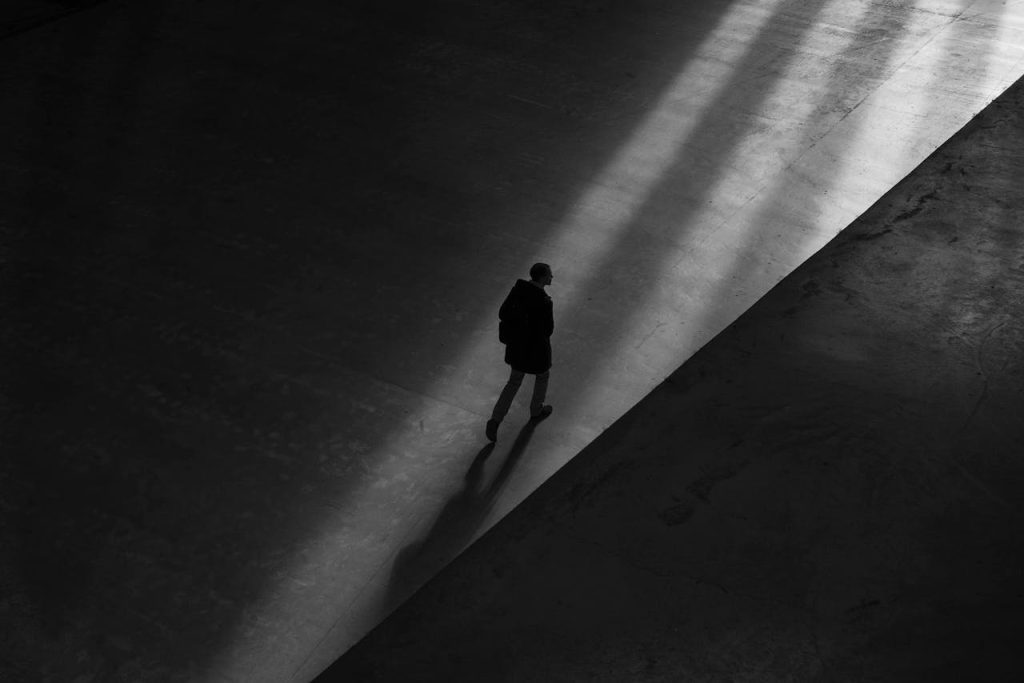
There’s a version of you that you don’t show anyone.
Maybe it’s the part that feels rage when someone disrespects you. The part that craves recognition but pretends not to care. The part that’s terrified of failure, of abandonment, of not being enough.
You’ve spent years pushing these parts down, convinced they make you weak or unacceptable. But here’s what psychologist Carl Jung discovered over a century ago: those hidden parts don’t disappear. They run your life from the shadows, sabotaging your relationships, career, and peace of mind in ways you don’t even recognize.
This is where shadow work comes in. And for men specifically, it might be the most important inner work you ever do.

What Is the Shadow?
The concept comes from Carl Jung, the Swiss psychiatrist who revolutionized our understanding of the unconscious mind. Jung used the term “shadow” to describe everything about ourselves that we repress, deny, or refuse to acknowledge.
Think of it this way: as children, we learn quickly which parts of ourselves are acceptable and which aren’t. Show anger? Get punished. Express fear? Get mocked. Want attention? Get called selfish. So we bury those parts. We pretend they don’t exist.
But they do exist. They just operate underground now.
According to Jung’s model, we all present a “persona” to the world, a carefully constructed mask of who we think we should be. The shadow is everything that mask hides: primitive emotions like rage, envy, and greed, but also positive qualities we’ve been taught to suppress, like ambition, sexuality, or creative impulses.
“Everyone carries a shadow,” Jung wrote, “and the less it is embodied in the individual’s conscious life, the blacker and denser it is.”
In other words, the more you ignore your shadow, the more power it has over you.
Why Men Especially Need This Work
Here’s the thing about growing up male in most cultures: the list of “unacceptable” emotions is long.
Fear? Weakness. Sadness? Pathetic. Vulnerability? Definitely not. Tenderness? Suspicious. Even joy, expressed too openly, can feel risky.
So men learn to compress their emotional range into a narrow band: maybe anger (if controlled), maybe confidence (if not too much), maybe stoicism (definitely). Everything else gets shoved into the shadow.
The result? Men walking around with massive unconscious reservoirs of unexpressed emotion, unacknowledged needs, and disowned parts of themselves. These buried elements don’t stay buried. They leak out as:
Explosive anger that seems to come from nowhere, irritability over small things that wouldn’t bother a balanced person, passive-aggressive behavior, addiction and numbing, relationship patterns that repeat despite your best intentions, a vague sense that something is missing even when life looks fine on paper.
Research on masculine archetypes by Jungian psychologist Robert Moore suggests that when men don’t do this inner work, they get stuck in “boy psychology,” never accessing their full mature masculine potential.

How the Shadow Shows Up in Daily Life
Your shadow reveals itself constantly. You just have to know where to look.
Strong reactions to others. Notice who irritates you most? According to Jung’s theory, the qualities we despise in others often reflect disowned parts of ourselves. That coworker’s arrogance bothers you because you’ve suppressed your own desire for recognition. Your friend’s neediness annoys you because you’ve denied your own need for connection.
This is called projection. We see our shadow in others because we can’t see it in ourselves.
Recurring patterns. The same relationship dynamic plays out with different people. The same conflicts arise at every job. The same self-sabotage appears whenever you get close to success. These patterns often trace back to shadow material, unconscious beliefs and wounds driving behavior you don’t understand.
Emotional triggers. When a minor comment sends you into a rage or spiral of shame, that’s disproportionate to the situation. Something deeper got activated. The shadow is speaking.
The gap between intention and action. You want to be patient but keep snapping at your kids. You want to be present but keep numbing out with screens. You want intimacy but keep pushing people away. The shadow creates this gap between who you want to be and how you actually behave.
The Masculine Archetypes and Their Shadows
One of the most useful frameworks for men’s shadow work comes from Robert Moore and Douglas Gillette’s book “King, Warrior, Magician, Lover.”
They identified four foundational masculine archetypes, each with its own shadow expressions:
The King represents leadership, order, and blessing others. His shadows are the Tyrant (who dominates and controls) and the Weakling (who abdicates responsibility and can’t make decisions).
The Warrior represents disciplined action, courage, and protecting what matters. His shadows are the Sadist (who enjoys cruelty and destruction) and the Masochist (who can’t defend himself and lets others walk over him).
The Magician represents knowledge, insight, and transformation. His shadows are the Manipulator (who uses knowledge to control others) and the “Innocent” (who remains naive and refuses to develop competence).
The Lover represents passion, connection, and aliveness. His shadows are the Addict (who loses himself in pleasure and sensation) and the Impotent Lover (who feels cut off from life and chronically depressed).
According to this model, mature masculinity requires developing all four archetypes while recognizing and integrating their shadow sides. Most men are overdeveloped in some areas and underdeveloped in others, with corresponding shadow patterns running their lives.
Which shadows do you recognize in yourself?
What Shadow Work Actually Involves
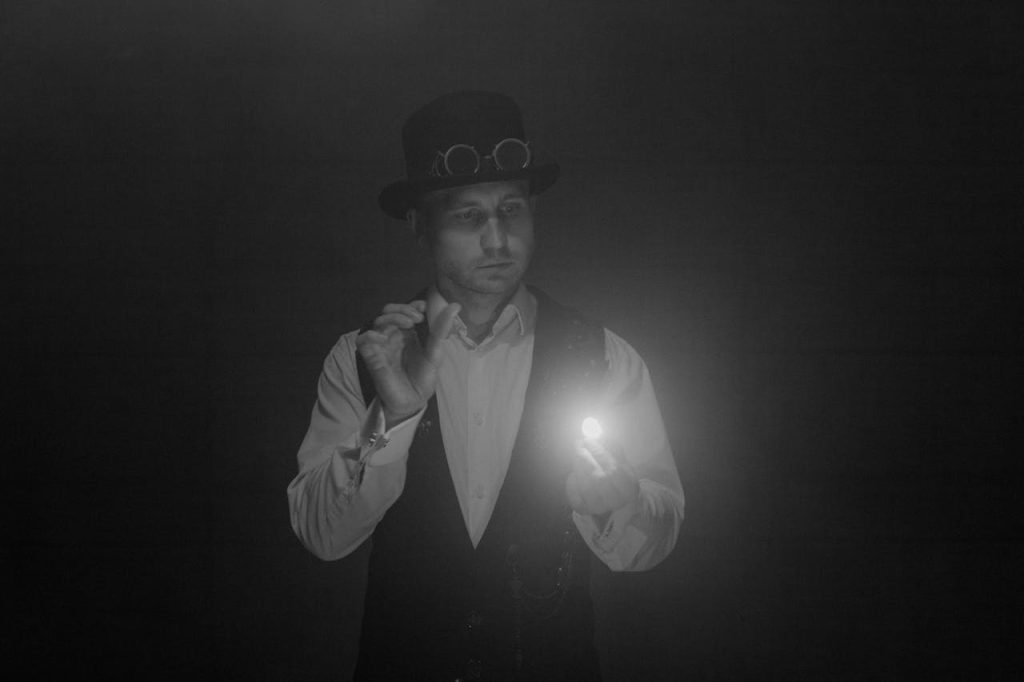
Shadow work is the process of making the unconscious conscious. It means bringing those hidden parts of yourself into the light where you can see them, understand them, and ultimately integrate them.
According to Jungian psychology, this isn’t about eliminating your shadow. You can’t. It’s part of you. The goal is integration: acknowledging these aspects, understanding where they came from, and finding healthy ways to express the energy they contain.
Here’s what that looks like practically:
Developing self-awareness. This is the foundation. You start noticing your reactions, triggers, and patterns without immediately trying to fix or judge them. Meditation helps here. So does journaling. The point is creating space between stimulus and response where you can observe what’s actually happening inside you.
Exploring your triggers. When something provokes a strong emotional reaction, especially one that seems disproportionate, that’s data. Shadow work involves asking: “Why did that bother me so much? What does this remind me of? What am I actually feeling underneath the surface reaction?”
Examining your projections. Those qualities you hate in others? Consider whether they might exist in you, too. This isn’t about self-blame. It’s about reclaiming parts of yourself you’ve disowned. Sometimes the things we judge most harshly in others are things we’ve forbidden ourselves to be.
Tracing patterns to their origins. Many shadow elements formed in childhood. The part of you that feels unworthy of love might trace back to a parent who was emotionally unavailable. The part that suppresses anger might connect to punishment you received for expressing it. Understanding where these patterns came from helps you respond to them with compassion rather than more repression.
Integrating rather than fighting. The shadow contains energy. When you suppress anger, you lose access to the assertiveness and boundary-setting that healthy anger provides. When you deny ambition, you lose the drive that could fuel meaningful work. Integration means finding constructive outlets for shadow energy rather than pretending it doesn’t exist.
Practical Shadow Work Exercises
Ready to start? Here are some approaches that work:
Journaling with prompts. Shadow work journal prompts can guide you into territory you wouldn’t explore on your own. Some examples:
What trait in others triggers the strongest reaction in me, and why?
What parts of myself do I try hardest to hide from others?
When I feel shame, what specifically am I ashamed of?
What would I do if I knew no one would judge me?
What patterns keep repeating in my life despite my efforts to change them?
Pay attention to dreams. Jung considered dreams a direct line to the unconscious. The figures and situations in your dreams often represent shadow material. Keep a dream journal and look for recurring themes.
Notice your body. Shadow material often shows up somatically before we’re consciously aware of it. Tension in your shoulders, a knot in your stomach, a clenched jaw. These physical sensations can point you toward emotions you’re suppressing.
Work with a therapist. Serious shadow work often benefits from professional guidance, especially if you’re dealing with trauma. A trained therapist can help you navigate difficult material safely and provide perspective you can’t get alone.
Find a men’s group. There’s something powerful about doing this work alongside other men. Hearing others name their struggles normalizes your own. Being witnessed in your darkness without judgment is profoundly healing.

What Happens When You Do This Work
The benefits of shadow work are significant:
Greater self-awareness. You understand why you do what you do. Patterns that seemed mysterious become clear. You stop being blindsided by your own reactions.
Emotional freedom. When you’re not spending energy suppressing parts of yourself, that energy becomes available for living. Many men report feeling more alive, more present, more capable of joy after doing shadow work.
Better relationships. When you stop projecting your shadow onto others, you can see them more clearly. Conflicts decrease. Intimacy becomes possible because you’re no longer hiding from yourself or them.
Access to your full power. The shadow contains positive qualities too, creativity, passion, assertiveness, sexuality. When these are repressed, you’re operating at a fraction of your capacity. Integration gives you access to your complete self.
Less reactivity. When you’ve processed old wounds and integrated shadow material, you respond to life rather than reacting from unconscious programming. You have choice where before you had only compulsion.
A sense of wholeness. This might be the deepest benefit. Instead of feeling fragmented, at war with yourself, carrying parts you’re ashamed of, you experience something like inner peace. Not because you’ve become perfect, but because you’ve accepted your full humanity.
A Word of Caution
Shadow work isn’t always comfortable. By definition, you’re looking at parts of yourself you’ve avoided, sometimes for decades. Difficult emotions will surface. Old wounds will reopen before they heal.
Go at your own pace. If something feels too overwhelming, step back. Seek professional support if you’re dealing with serious trauma or mental health challenges. This isn’t about retraumatizing yourself. It’s about gradual, compassionate integration.
Also, shadow work isn’t about wallowing in darkness or using your wounds as excuses. The goal is awareness and integration, not endless navel-gazing. At some point, you take what you’ve learned and apply it to living better.

The Courage This Requires
Let’s be honest: most people never do this work. It’s easier to stay on the surface, to keep the mask firmly in place, to blame external circumstances for internal problems.
But there’s a cost to that avoidance. Jung put it starkly: “Until you make the unconscious conscious, it will direct your life and you will call it fate.”
Those patterns that keep repeating? The relationships that keep failing? The potential that keeps going unrealized? Much of that traces back to shadow material you haven’t faced.
Doing shadow work requires courage. The courage to look at yourself honestly. The courage to feel things you’ve been avoiding. The courage to admit that some of the problems in your life originate inside you, not outside.
But that same realization is liberating. If the problem is outside you, you’re powerless. If it’s inside you, you can do something about it.
The Bottom Line
Shadow work for men isn’t optional if you want to live fully. The parts of yourself you’ve hidden don’t go away. They run your life from the basement of your psyche, creating patterns you don’t understand and can’t seem to break.
The path to authentic masculinity, to mature manhood, runs directly through your shadow. Not around it. Through it.
This means confronting the parts of yourself you’ve been taught to reject. It means feeling emotions you’ve suppressed for years. It means taking responsibility for patterns you’d rather blame on others.
It’s uncomfortable work. But on the other side is something worth having: wholeness. The experience of being fully yourself, integrated rather than fragmented, powerful rather than reactive, at peace rather than at war with your own nature.
As Jung said, “One does not become enlightened by imagining figures of light, but by making the darkness conscious.”
Your shadow is waiting. It always has been. The question is whether you’ll have the courage to meet it.

Tudor Cioaba is the founder of Masculinitism and a Senior UX Researcher who studies how people think, feel, and decide. He holds an MBA and is a certified NLP Practitioner and Life & Business Coach. After more than twelve years of personal inner work, he writes about healthy masculinity from lived experience, not theory: honest, practical, and free of hype.
Și când nu mai simți nimic? Nici furie , nici bucurie, nici invidie? Cum faci să mai simți din nou?
Cristina, intrebarea ta e profunda si arata ca ai ajuns intr-un loc de amorteala emotionala – ceea ce e, de fapt, un mecanism de protectie al psihicului tau.
Cand nu mai simti nimic – nici furie, nici bucurie, nici invidie – inseamna ca ai suprimat atat de mult timp emotiile “nasoale” incat ai ajuns sa suprimi si pe cele “bune”. Psihicul nu poate selecta – daca amorțești durerea, amorțești si bucuria.
Cum faci sa mai simti din nou?
**1. Recunoaste ca amorteala e protectie.**
Undeva, la un moment dat, a fost prea dureros sa simti. Asa ca ai ales (subconstient) sa nu mai simti deloc. Asta te-a protejat atunci. Dar acum te limiteaza.
**2. Incepe cu micile senzatii fizice.**
Inainte sa simti emotii mari, trebuie sa-ti reconectezi cu corpul. Pune mana pe piept. Simti caldura? Simti bataile inimii? Ia o respiratie adanca. Simti aerul care intra in plamani? Incepe cu astea – mici senzatii fizice care te readuc in corp.
**3. Creeaza siguranta emotionala.**
Amorteala vine din lipsa de siguranta. Daca nu e sigur sa simti, nu vei simti. Asa ca trebuie sa-ti creezi un spatiu sigur – fie cu un terapeut, fie singura, intr-un loc linistit – unde iti dai voie sa simti fara consecinte.
**4. Incepe cu emotiile mici.**
Nu incerca sa simti bucurie sau furie mare. Incepe cu: “Ma simt putin obosita.” “Simt o usoara iritare.” “Am o usoara caldura in piept cand vad ceva frumos.” Mici emotii, recunoscute si numite.
**5. Scrie.**
Journaling-ul e o unealta puternica. Scrie 10 minute pe zi: “Ce simt acum?” Chiar daca raspunsul e “nimic” – continua sa scrii. “De ce nimic? Cand am inceput sa nu mai simt? Ce s-a intamplat atunci?”
**6. Miscare.**
Emotiile sunt stocate in corp. Cand corpul e rigid, emotiile raman blocate. Miscare – dans, alergare, yoga, chiar si plimbari – ajuta la eliberarea emotiilor blocate.
**7. Terapie.**
Daca amorteala e profunda si de lunga durata, e posibil sa ai nevoie de ajutor profesional. Un terapeut bun te poate ghida sa-ti reconectezi cu emotiile intr-un mod sigur si sustenabil.
**Ceea ce e important sa intelegi:**
Nu vei trece de la “nimic” la “totul” peste noapte. E un proces lent, treptat, de reconectare. Si primele emotii care vin vor fi, probabil, dureroase – tocmai pentru ca le-ai suprimat atat de mult timp.
Dar dincolo de durere e viata. E bucurie. E capacitatea de a simti cu adevarat – nu doar sa existi.
Mult curaj pe drumul acesta, Cristina. E greu, dar posibil 🙏