

When was the last time you made something just for the sake of making it?
Not for work. Not because someone asked. Just because your hands needed something to do and your mind needed somewhere else to be.
If you’re drawing a blank, you’re not alone. Somewhere between childhood and adulthood, most of us stopped creating. We got “serious.” We focused on productivity, careers, responsibilities. And creativity became something other people did.
But here’s what nobody told you: that creative part of you didn’t disappear. It’s just been waiting.
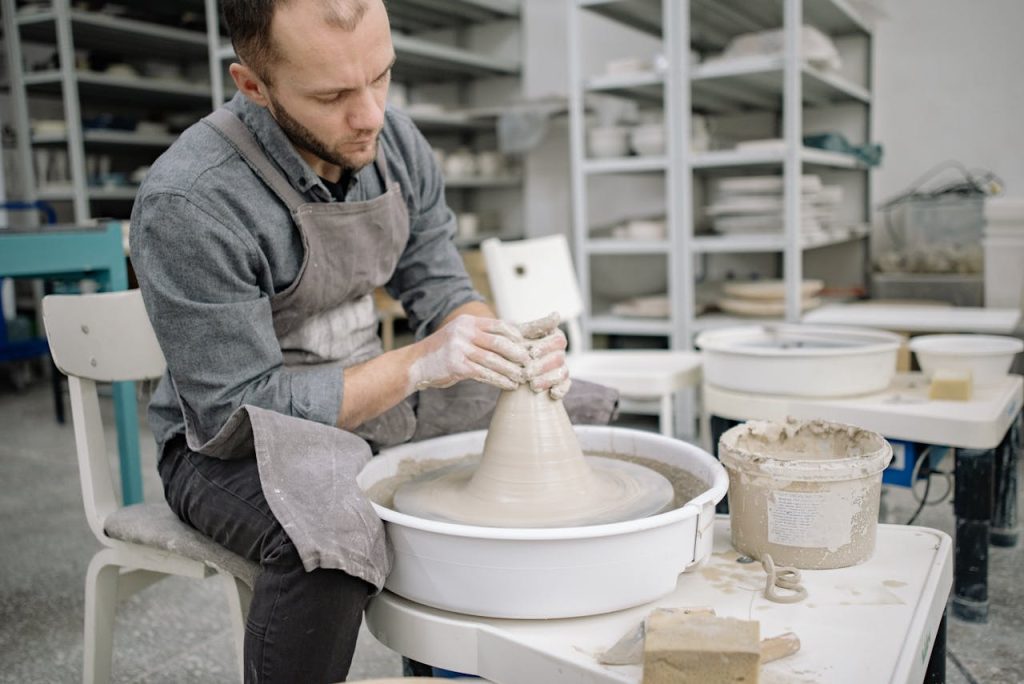
Why Creativity Matters More Than You Think
Let’s get this out of the way first. This isn’t about becoming an artist or making something gallery-worthy. This is about your mental health.
According to an American Psychiatric Association poll, 46% of Americans use creative activities to relieve stress and anxiety. And here’s the interesting part: people who rate their mental health as “excellent” engage in creative activities more frequently than those who rate it as “fair” or “poor.”
Coincidence? Probably not.
Research on creativity and mental health shows that engaging in creative activities can decrease symptoms of depression and anxiety, reduce stress, and even improve immune system functioning. When you create something, your brain literally works differently. The fear center (your amygdala) calms down, and you enter what psychologists call a “flow state.”
You know that feeling when you’re so absorbed in something that time disappears? That’s flow. And it’s basically free therapy.
The Flow State: Getting “In the Zone”
Psychologist Mihaly Csikszentmihalyi (yeah, I can’t pronounce it either) spent decades studying this phenomenon. He found that when people enter flow states, their brains shift into a more meditative mode. Self-critical thoughts quiet down. Worry fades. You become fully present.
According to research from Positive Psychology, people who frequently experience flow report higher levels of happiness, creativity, and productivity. Flow has also been linked to improved mental health, reducing stress and anxiety by providing a sense of control and accomplishment.
Here’s what makes creative activities so effective at producing flow: they’re challenging enough to engage you fully, but flexible enough that you can work at your own pace. Unlike work, there’s no deadline breathing down your neck. Unlike scrolling your phone, your brain is actually active and engaged.
It’s the sweet spot between boredom and overwhelm. And when you hit it regularly? Life just feels better.
Why Men Especially Need This
I’ll be direct. Most men are terrible at processing emotions through words.
That’s not a criticism; it’s just how many of us were raised. “Toughen up.” “Walk it off.” We learned to push feelings down, not express them. And for a while, that might seem fine. Until it isn’t.
Studies show that men are statistically less likely to seek help for mental health issues and more likely to engage in harmful coping mechanisms like substance abuse or aggression. We’re not worse at feeling things. We’re just worse at talking about them.
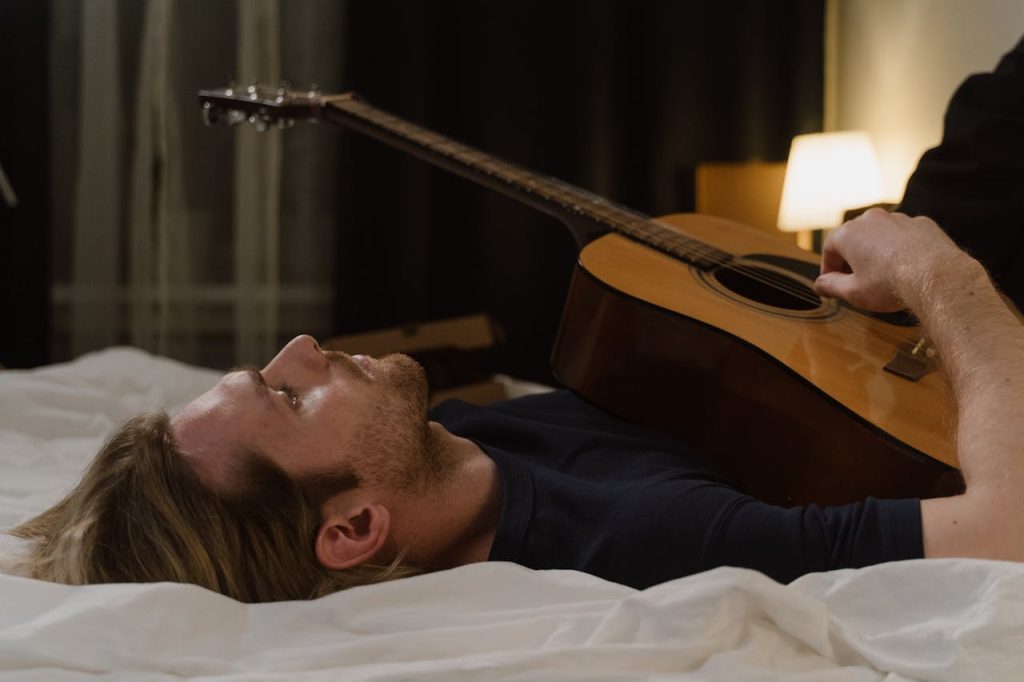
But here’s what’s interesting: creative activities bypass those verbal barriers entirely. You don’t have to find the right words when you’re building a bookshelf. You don’t need to explain your feelings when you’re playing guitar. The work itself becomes the expression.
A man sanding wood in his garage might not call it “emotional processing.” But that’s exactly what’s happening. The rhythm, the focus, the tangible progress – it all adds up to something his nervous system desperately needs.
Creative Outlets Worth Exploring
Not sure where to start? Here are some options, organized by what you might be looking for.
For When You Need to Work With Your Hands
There’s something primal about transforming raw materials into something useful. Your hands move, your brain quiets, and at the end, you have proof that your time mattered.
Woodworking is the classic for a reason. You start with a piece of lumber and end with a cutting board, a shelf, or a piece of furniture. The learning curve is gentle enough that you can make simple projects quickly, but steep enough that you’ll never run out of challenges. Plus, there’s the satisfying smell of sawdust.
Cooking (yes, this counts) lets you create something that brings pleasure to yourself and others. It’s practical, it’s creative, and the feedback is immediate. Unlike a painting that might hang on a wall forever, dinner gets eaten and appreciated today.
Leather work, metalworking, or blacksmithing appeal to men who want something more physical. There’s heat, hammering, and the transformation of tough materials into refined objects. Not exactly low-key, but deeply satisfying.

For When You Need to Get Out of Your Head
Sometimes the best thing you can do is give your brain something absorbing to focus on.
Photography forces you to see the world differently. You start noticing light, composition, and moments you would have walked right past. You can do it alone or use it as an excuse to explore new places. And these days, your phone is good enough to start.
Learning an instrument is harder than it looks, which is actually the point. When you’re struggling to get your fingers in the right position, there’s no room to ruminate about work or relationship problems. Research shows that music releases dopamine and oxytocin, improving your mood and helping you connect with others.
Gardening sounds too simple to be therapeutic, but don’t underestimate it. Getting your hands in soil, nurturing something that grows, being outside – it all adds up. Studies suggest that interacting with nature has immediate cognitive benefits and mood boosts.
For When You Need to Express Something
Sometimes you’ve got things inside that need to come out. You might not even know what they are until you start.
Writing doesn’t require talent. It requires willingness. Journaling, fiction, poetry, letters you’ll never send – all of it counts. According to research, many men find that writing helps them organize thoughts, make connections, solve problems, and soothe stress. It’s cathartic to get something out of your head and onto paper.
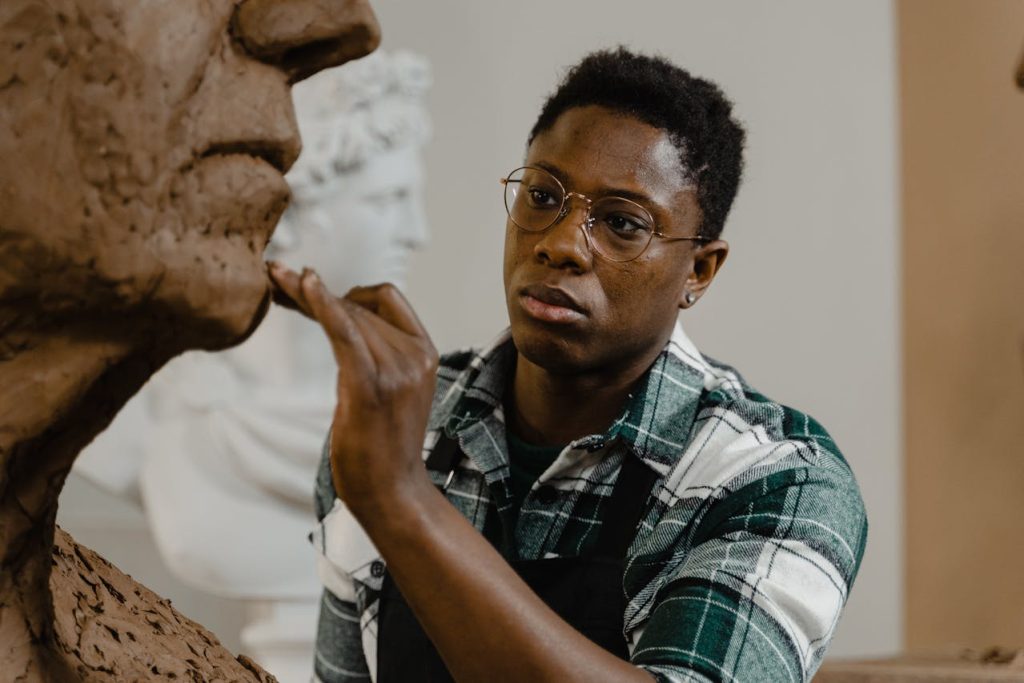
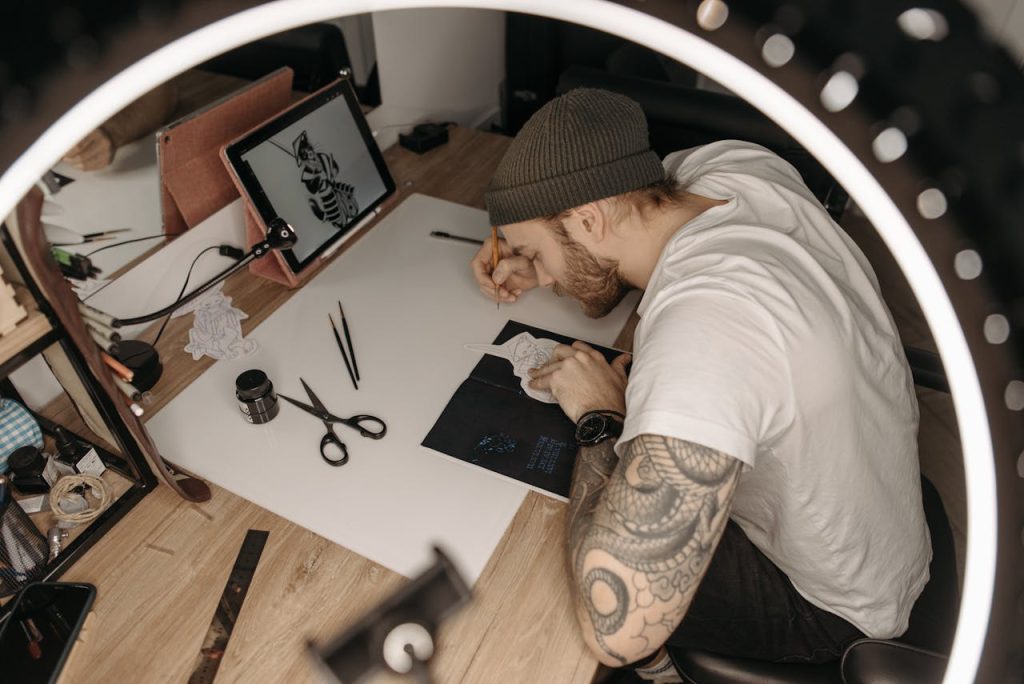
Visual art (drawing, painting, sculpture) gives you permission to make something that exists purely because you made it. You don’t have to be good. In fact, expecting to be good is what stops most people. Just make marks on paper. See what happens.
Music creation, whether that’s writing songs, producing beats, or just jamming alone in your room, lets you express moods that words can’t capture. Angry? That’s a heavy riff. Melancholic? Minor key. You don’t have to explain it to anyone.
The Biggest Obstacle (And How to Beat It)
You know what stops most men from picking up creative hobbies? It’s not time. It’s not money.
It’s the fear of being bad at it.
We’re conditioned to see creativity as a talent – something you either have or don’t. If you’re not “naturally gifted,” why bother? You’ll just embarrass yourself.
Here’s the thing though. Every person who’s good at something was once terrible at it. The difference is they kept going anyway.
A friend of mine started woodworking in his forties. His first cutting board looked like it had been attacked by beavers. His kids still tease him about it. But last month, he built his daughter a custom bookshelf for her apartment. The pride on his face was worth every crooked cut along the way.
Creativity isn’t about the end product. It’s about the process. The flow. The break from your usual mental loops. Even “bad” creative work delivers those benefits.
So give yourself permission to be terrible. It’s the price of admission.
Starting Small (Really Small)
You don’t need to buy expensive equipment or commit to a weekly class. You just need to try something.
Fifteen minutes. That’s it.
Maybe you sketch for fifteen minutes after dinner. Maybe you pick up that guitar that’s been collecting dust. Maybe you write one page in a journal before bed.
Research from Utah State University confirms that even small amounts of leisure time spent on enjoyable activities can reduce stress and improve wellbeing. You don’t need to become a master. You just need to show up occasionally.
Once you find something that clicks, you’ll naturally want to do more. But the first step is just starting.
The Ripple Effects
Here’s what happens when men start creating regularly.
They sleep better because their minds aren’t racing as much. They handle stress more effectively because they have an outlet. Their relationships improve because they’re less irritable and more present.
Some find communities – woodworking clubs, open mic nights, photography groups – and discover friendships they didn’t know they needed. Others prefer the solitary nature of creative work, and that’s fine too.
A few even turn hobbies into side income. But that’s a bonus, not the goal.
The goal is simpler: to feel more alive. To have something that’s yours, separate from work and obligation. To remember what it feels like to make something for no reason other than the joy of making it.
The Bottom Line
You weren’t meant to just consume. You were built to create.
That instinct got buried under productivity culture and the pressure to be “useful” every waking hour. But it’s still there.
Creative outlets aren’t frivolous. They’re essential. They give your brain a break, help you process emotions you can’t put into words, and remind you that you’re more than your job title or your to-do list.
So find something. Woodworking, photography, cooking, music, writing, pottery, gardening – pick one and give it fifteen minutes. You might be terrible at first. That’s okay.
Because here’s the secret: you’re not trying to make a masterpiece. You’re trying to make space for yourself.
And that’s worth every awkward, imperfect attempt along the way.

Tudor Cioaba is the founder of Masculinitism and a Senior UX Researcher who studies how people think, feel, and decide. He holds an MBA and is a certified NLP Practitioner and Life & Business Coach. After more than twelve years of personal inner work, he writes about healthy masculinity from lived experience, not theory: honest, practical, and free of hype.